
Quick answer
When an office fit-out runs late, responsibility follows the cause and the contract. Delays from the contractor’s own labour, planning or late orders are usually the contractor’s; delays from late client decisions, approvals or changes are usually the client’s; delays from events neither side controls are usually shared, with more time but often no extra money. To recover, find the real cause, fix the critical path and agree a written recovery programme.
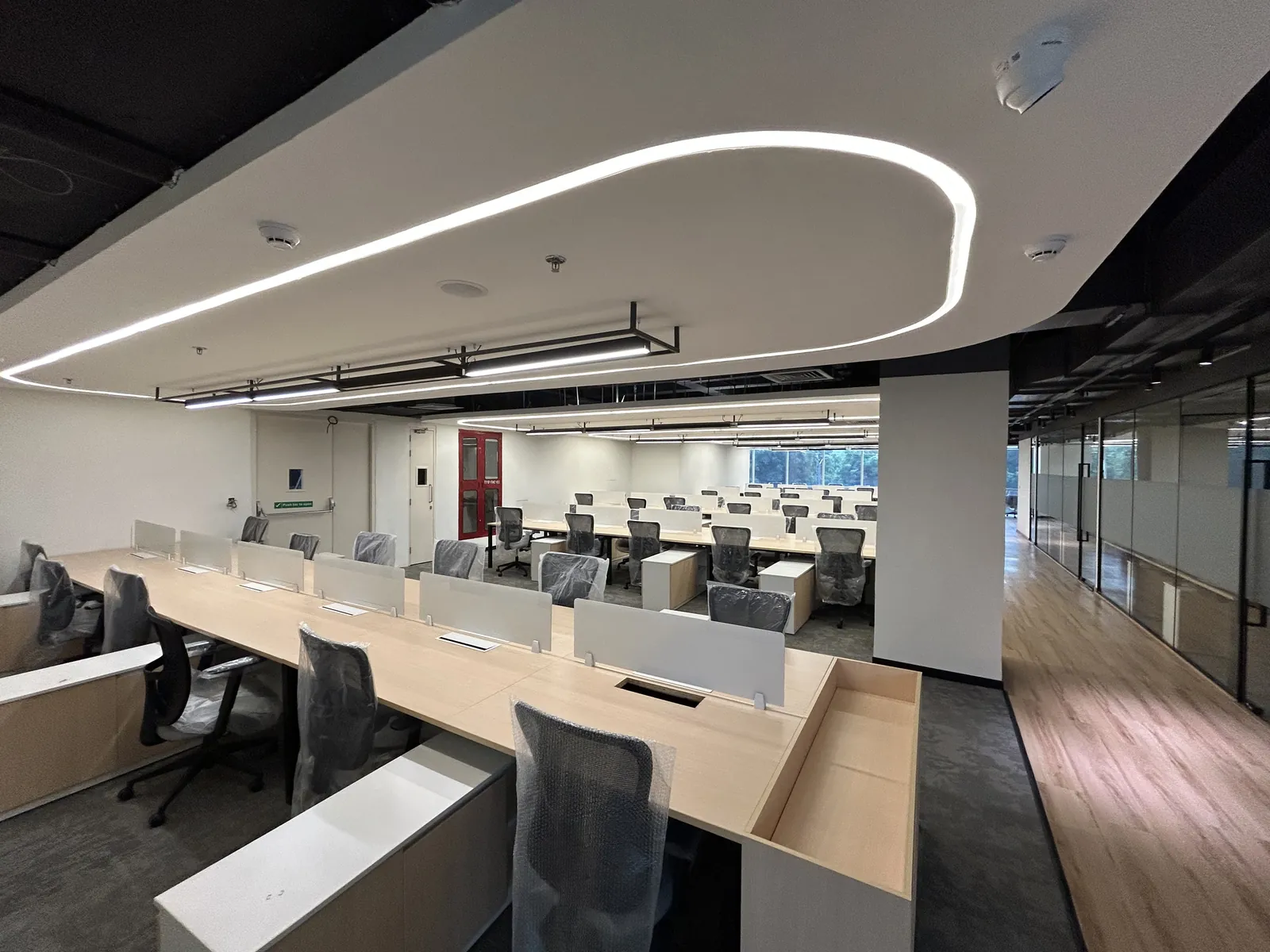
Your office fit-out is running late and the move date is at risk. Who is responsible depends on why it slipped and what your contract says about notice, extensions of time and delay damages. This guide is for admin heads, CFOs and founders: how to find the real cause, how contracts usually split the risk, what to ask for every week, and the steps that bring a late project back.
This is general information, not legal advice. For a dispute over a specific contract, speak to your lawyer.
Why do office fit-outs run late?
Most late fit-outs trace back to a handful of causes. They split roughly into what the client controls, what the contractor controls and what nobody controls.
- Late approvals. The building’s facility team has to approve fit-out drawings, especially air conditioning tie-ins, sprinklers and fire alarm changes. Incomplete submissions mean repeated comment rounds. Some projects also need fire department clearance before occupation.
- Client decisions and changes. Material selections, design revisions and sign-offs that sit pending, or a change after work starts, such as extra cabins or a moved pantry, which means redoing ceilings, power points and AC zoning.
- Long-lead items. AC equipment, imported chairs, rated glass partitions and custom joinery can take several weeks. Ordered late, they set the finish date.
- Contractor resourcing. Too few workers on site, a subcontractor who does not turn up, or trades that wait for each other because nobody planned the sequence.
- Building rules. Many towers allow noisy work, material movement and goods lift use only at night or at weekends. If the programme ignores this, it slips from the first week.
- Site surprises. What the floor reveals once work starts: services that do not match the drawings, uneven slabs, or base-building systems that need upgrading.
Officea’s own published projects show the pattern. The 28,000 sq ft Bangalore office was quoted at 90 days and handed over in 105; the extra 15 days came from client-side sign-offs on design revisions and material selections, not from design or construction. The 42,000 sq ft bare-shell office in Udyog Vihar, Gurgaon, with complete air conditioning and a full façade change, was handed over in the 105 days quoted.
Who is responsible for a fit-out delay?
Start with the cause, then read the contract. Most fit-out contracts, whatever their wording, sort delay into three groups.
| Cause of delay | Usually whose risk | Typical result |
|---|---|---|
| Contractor’s labour, supervision, planning, late orders, poor workmanship that has to be redone | Contractor | No extra time; contractor recovers at its own cost; delay damages may apply if the contract has them |
| Late client decisions, approvals, information or access; client changes; client’s separate vendors (IT, AV, furniture) running late | Client | Extension of time; extra cost for the contractor if the contract allows it |
| Events neither side controls: extreme weather, government orders, strikes, a building-wide shutdown | Shared | Extension of time, usually without extra money |
| Landlord or building approvals | Depends on who the contract makes responsible for obtaining them | Check the scope: “contractor to obtain” and “client to obtain” lead to different answers |
Two points catch people out. First, if both sides caused delays over the same weeks, working out who owes what gets complicated and contracts handle it differently; this is where records matter most. Second, a delay only moves the finish date if it is on the critical path, the chain of tasks that sets the earliest handover. A late reception sofa rarely delays handover; a late AC approval often does.
What does the contract usually say?
Before you argue about blame, find these clauses. They decide most delay questions.
- Start date and completion date. Check when the clock starts. Some contracts start it at signing, some at site handover, some at design freeze. Officea’s Gurgaon and Noida projects, for example, were quoted from design freeze to handover.
- The programme. Whether a baseline programme is part of the contract, and how it is updated.
- Extension of time. Which events give the contractor more time, and the written notice it must give, usually within a set number of days of the event.
- Delay damages. Many contracts set a pre-agreed amount for each day or week of contractor delay, called liquidated damages, usually capped. Under Indian contract law (Section 74 of the Indian Contract Act, 1872) a named amount is generally treated as the ceiling of reasonable compensation, not an automatic payment, so take legal advice before deducting it.
- Changes. How a change is priced and approved, and whether its time impact must be agreed before work starts.
- Force majeure. What counts, the notice required and what happens to time and cost.
- Who obtains approvals. Building, fire and any authority approvals, and who prepares the drawings for them.
If your contract is silent on most of these, the conversation will be harder. That is worth fixing on the next project; our office fit-out checklist for CFOs lists what to settle before signing.
How do you spot a delay early?
A fit-out rarely goes from on time to a month late overnight. Ask for a one-page weekly report that shows:
- progress against the baseline programme, with slippage in days on the critical path;
- decisions and approvals the contractor needs from you, each with a date;
- long-lead orders, with order date and promised delivery;
- approved and pending changes, with their cost and time impact;
- open risks and site photographs.
Warning signs are the same on most sites: fewer workers than last week, ceilings closing before services are tested, a long list of “awaiting client” items, or delivery dates that keep moving. Raise each one in writing the week you see it. If you are still planning, the fit-out timeline calculator gives a realistic range for your size and tells you whether it fits your rent-free period.
How do you bring a late fit-out back on track?
- Agree the facts. Sit down with the contractor and list each delay event, its date and its cause. Agree what is the contractor’s, what is yours and what is shared before you discuss money.
- Clear your own list. Pending selections, revisions and approvals are often the quickest days to win back. Decide them in one meeting with the people who can sign.
- Ask for a recovery programme. A revised programme showing how the lost days will be made up: trades running in parallel, extra shifts or labour where the building allows night work, and dates for each zone.
- Look at long-lead items. If a delivery is driving the date, ask for available equivalents of the same specification, or a temporary item while the original arrives.
- Consider a phased handover. Workstations and meeting rooms finished first, the pantry or boardroom a week later. Occupying part of the floor needs fire systems working in the occupied zones, so check with the building.
- Keep everything in writing. Minutes, revised dates, agreed extensions and any change in cost. It protects both sides if the question of delay damages comes up later.
A delay also costs money outside the contract: rent on the old office, rent on the new one once any rent-free period ends, and the cost of moving twice if you need temporary space. Our guide to fit-out timelines and rent-free periods explains how to plan around that window.
How do you prevent delays on the next project?
- Start design before the lease clock starts. A test fit during lease negotiation gives the contractor a head start.
- Name your decision makers. Who approves designs, materials and changes, and how quickly they respond.
- Freeze the layout before site work starts. Changes after that cost time as well as money.
- Order long-lead items early, as soon as their specification is fixed.
- Put the programme, notice periods and delay terms in the contract, and compare them across quotes as carefully as the price. A complimentary quote comparison includes the programme each bidder offers.
- Reduce hand-offs. When design, MEP, civil and furniture sit with one company, there is no gap between them to argue over. See design and build vs a traditional fit-out.
For the other problems that come up before, during and after a fit-out, see office fit-out problems: before, during and after, or browse office problems and solutions. Officea designs and builds offices under one contract from studios in Delhi (Nehru Place), Gurgaon (DLF Grand Mall), Noida (Sector 3) and Bangalore (Residency Road).
Frequently asked questions
Who is responsible when an office fit-out runs late?
It depends on what caused the delay and what the contract says. Delays from the contractor's own resourcing, planning or late orders usually sit with the contractor. Delays from late client decisions, changes or late information usually sit with the client. Delays from events neither side controls are usually shared: the contractor gets more time but often no extra money.
Can I deduct money from the contractor for a late fit-out?
Only if the contract provides for it and the delay is the contractor's. Many fit-out contracts set a pre-agreed amount per day or week of delay, called liquidated damages, usually with a cap. Under Indian contract law such an amount is generally treated as the upper limit of reasonable compensation, so take legal advice before deducting anything.
What is an extension of time in a fit-out contract?
An extension of time moves the completion date when a delay is not the contractor's fault, such as late client approvals or a change the client asked for. Most contracts require the contractor to give written notice within a set period, so check the notice clause and keep records of every delay event.
What should a weekly fit-out progress report show?
Progress against the baseline programme, the critical path and any slippage in days, decisions and approvals the contractor needs from you with dates, long-lead orders and their delivery dates, open risks, approved and pending changes, and site photographs. One page with those items is enough.
How can a late office fit-out be brought back on track?
Find the true cause first, then re-sequence work so trades run in parallel, add shifts or labour where the building allows it, clear pending decisions in one meeting, swap long-lead items for available equivalents of the same specification, and, if needed, agree a phased handover of finished zones.
Does design and build reduce the risk of fit-out delays?
It removes the hand-offs between separate designer, MEP and civil contractors, which are a common source of delay and dispute, because one company owns both the drawings and the programme. It does not remove client-side delays, so decisions and approvals still need owners and deadlines.