
Quick answer
People can hear meeting room conversations because sound finds the weakest path out of the room. The usual culprits are partitions that stop at the false ceiling, so sound travels over the top through the shared ceiling void; glass and doors without acoustic seals; gaps at door bottoms, sockets and partition edges; ducts and transfer grilles that connect rooms; and hard surfaces that make voices louder inside the room. The fix is to close the leaks first, with ceiling barriers or full-height partitions, door seals and sealed glazing, then add absorption panels. Most of this can be done in a working office, room by room.
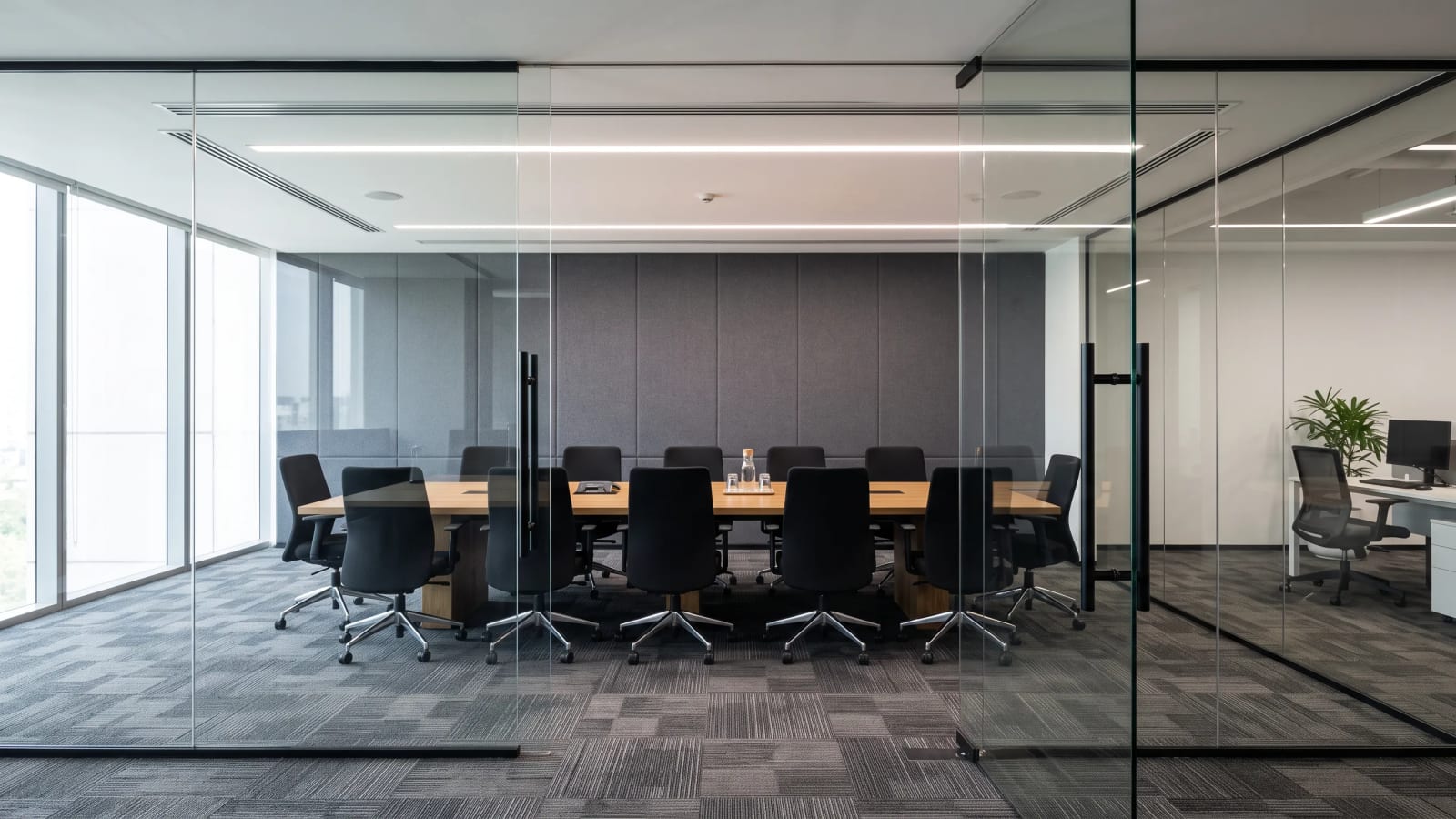
A salary discussion, a client call or a difficult appraisal, and the people sitting outside hear every word. It is one of the most common complaints admin and HR teams receive after a move, and it damages trust quickly. This guide is for admin and facilities heads, HR leaders, CFOs and founders: why meeting room sound leaks happen, how to find the leak in your own rooms, and which fixes work in an office that is already occupied.
Why can people hear meeting room conversations?
Sound behaves like water: it escapes through the weakest point. A meeting room is only as private as its leakiest gap, so a well-built wall does little if the ceiling above it is open or the door has a gap at the bottom. Acoustic guidance from bodies such as National Research Council Canada notes that even a very small opening can limit a partition to a fraction of its rated performance. In most offices, the leak is one of these:
| Cause | What you notice | Typical fix |
|---|---|---|
| Partition stops at the false ceiling | Voices heard clearly in the next room or cabin, as if through the ceiling | Extend the partition to the slab, or add a ceiling-void barrier above the wall |
| Glass without acoustic seals | Sound heard along the glass joints and at the frame edges | Seal joints and perimeters; upgrade to laminated or double glazing for private rooms |
| Gaps around the door | Speech heard most clearly near the door, especially at floor level | Perimeter seals, a drop seal at the bottom, a solid-core door |
| Shared ducts, return grilles and transfer air paths | Sound from one room heard through the grilles of another | Lined ducts, attenuators or acoustic transfer boxes, agreed with the HVAC engineer |
| Back-to-back sockets and service gaps | Voices heard through a wall at socket or data box height | Offset the boxes, seal penetrations with acoustic sealant or putty pads |
| Hard, echoey room | People raise their voices; the room sounds loud and boomy | Absorption: acoustic ceiling tiles, wall panels, carpet, soft furniture |
The first cause on that list is the most common. To save cost and time, partitions are often built only up to the false ceiling, leaving the void above open across several rooms. Sound goes up through the ceiling tiles, across the void and down into the next room. A thin gypsum or mineral fibre ceiling stops very little of it.
There is also a quieter cause: the open office itself. When the floor outside is very quiet, every word from the meeting room stands out. That is why a room can seem private at 10 am, when the floor is busy, and leaky at 7 pm.
How do you find where the sound is leaking?
You do not need instruments to find most leaks. Two people and a phone playing speech or music are enough.
- Play speech in the room at normal meeting volume. Use a phone or a laptop speaker on a fixed volume and close the door.
- Walk around the outside slowly. Listen at the door edges and the bottom gap, along glass joints, at socket height on shared walls, and under return grilles in the neighbouring room.
- Check the ceiling. With the building team’s permission, lift one ceiling tile next to the partition and look up. If you can see the void continuing over the wall into the next room, you have found the main path.
- Look for daylight and draughts. With the room lights off and the corridor lit, light showing under the door or around the frame means sound is getting through the same gap.
- Note what people actually hear. Being aware of voices is different from understanding words. Privacy problems are about intelligible speech, so record where words are clear.
Keep a simple sheet for each room: where the sound was clearest, what you saw above the ceiling and the state of the door and glass. That sheet becomes the brief for whoever fixes it.
Which fixes stop meeting room sound leaks?
Work in this order: seal the leaks, block the paths, then absorb. Absorption panels alone make a room sound better inside but rarely stop people outside from hearing it.
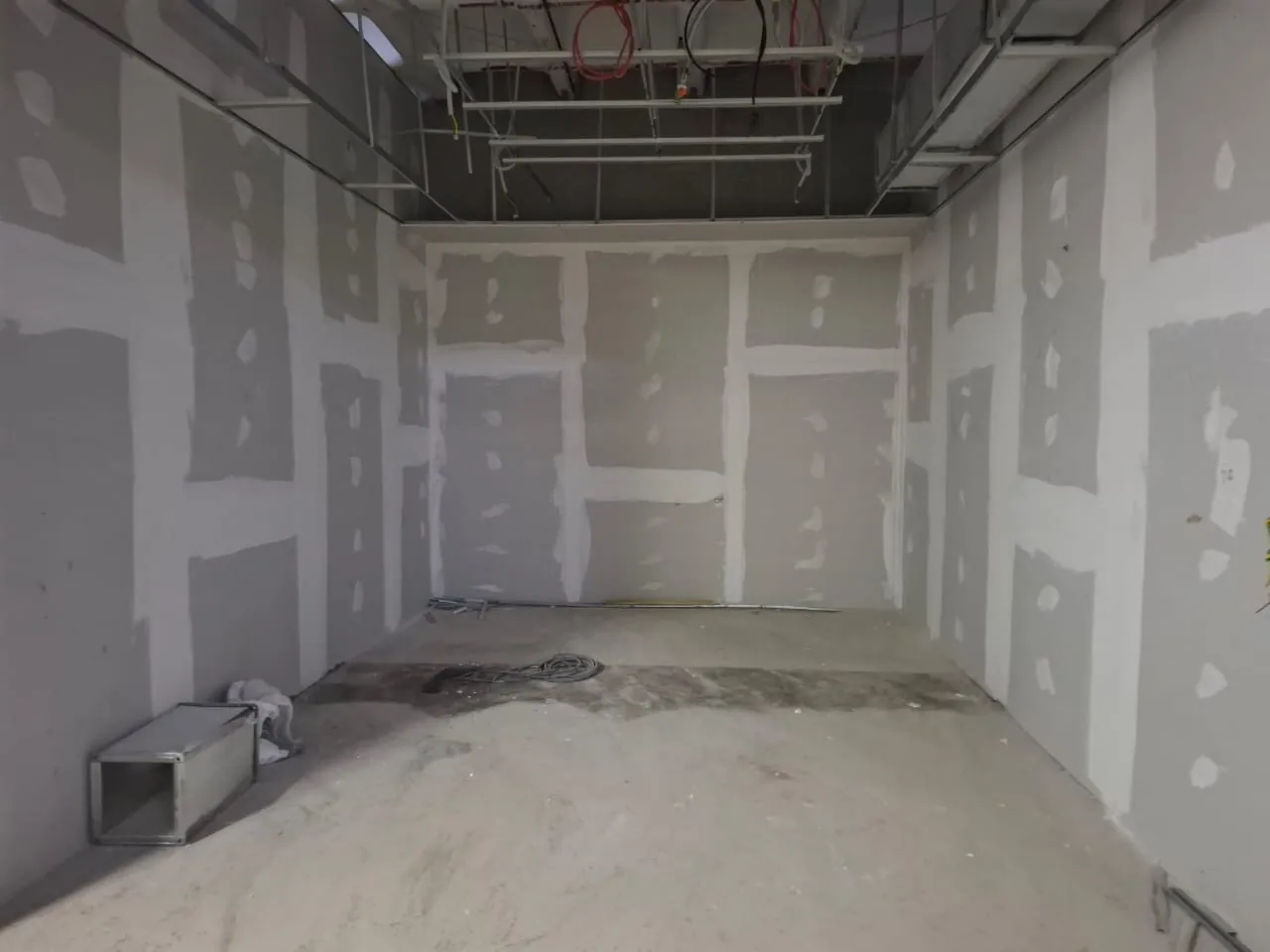
- Close the ceiling void. The strongest fix is a partition that runs from the floor slab to the slab above. Where that is not practical, a ceiling-void barrier, a dense board or insulated barrier built above the partition line and sealed at the edges, closes the path over the top. Sprinkler pipes, ducts and cable trays that pass through the barrier must be sealed around, and fire requirements checked.
- Seal the door. Fit perimeter seals on the frame and an automatic drop seal at the bottom. Hollow doors are light and leak; a solid-core door makes a clear difference.
- Seal the glass. Replace gaps or dry joints with proper acoustic seals and gaskets. For rooms used for confidential conversations, laminated glass or a double-glazed partition with an air gap performs better than a single sheet.
- Treat the ducts. If rooms share a return path or transfer grilles, ask an HVAC engineer for lined ducts, attenuators or acoustic transfer boxes. Do not simply block grilles: the room still needs fresh air and a return path, or it will become stuffy. Our guide on why an office feels stuffy explains why.
- Seal the services. Offset back-to-back electrical and data boxes, and seal around every pipe and cable that passes through the wall.
- Add absorption inside. Acoustic ceiling tiles, fabric wall panels, carpet and upholstered chairs reduce echo, so people talk more quietly and video calls sound clearer.
- Consider sound masking outside. A low, even background sound in the open office makes speech from rooms harder to understand. It helps, but it is not a fix for a leaking room.
For the technical background on NRC, STC and how partitions are specified, read our office acoustics design guide.
Can a glass meeting room ever be private?
Yes, but it takes more than glass. Glass rooms look open and bring daylight into the floor, which is why they are popular. A single pane in a light frame, with dry joints and a standard glass door, will leak. A glass room can work for confidential use when the glazing is laminated or double, the frames and joints are sealed, the door has a full set of seals, and the partition above the ceiling is closed off. Decide which rooms truly need that level of privacy, such as HR, leadership and finance rooms, and keep lighter glass for team huddles where a little sound transfer does not matter. Manifestation film or frosting gives visual privacy only; it does nothing for sound.
Can you fix sound leaks without stopping work?
Most of these fixes suit an occupied office. Door seals, glass seals, service sealing and wall panels are small, clean jobs that can be done room by room after hours. Ceiling-void barriers involve lifting tiles and working above the ceiling, so they are usually scheduled for evenings or weekends, with the landlord’s approval and the building’s permit process for work above ceilings. Replacing glass or rebuilding a partition takes a room out of use for a few days, so plan it around the meeting calendar.
We cover phasing, quiet hours and approvals in how to refresh an office without stopping work. If acoustics is one of several issues, such as tired finishes, poor lighting or rooms that no longer match how the team meets, look at it as part of a wider update: our complete guide to an office refresh explains how to scope one.
How do you avoid sound leaks in a new fit-out?
Sound leaks are cheapest to prevent at design stage. When you brief a designer or compare quotes, check these points:
- Which rooms are marked for privacy, and are their partitions shown going to the slab or with a ceiling barrier?
- Does the quote specify door seals, solid-core doors and the glass build-up for each room type, or just “glass partition”?
- Has the HVAC design allowed for attenuated return paths for private rooms?
- Are acoustic checks part of the snag list at handover? See our snagging inspection guide.
Two quotes can look similar on paper and differ completely on these details. Our quote comparison tool helps you line them up item by item. The way rooms sound also changes how people behave at work, from where they take calls to whether they speak openly; read how office design affects employee behaviour for more.
Acoustic upgrades are priced after a survey of your rooms, because the cost depends on how many rooms need treatment and what is above the ceiling. For a complete fit-out, Officea’s published rates in Delhi NCR are ₹1,800 (Basic), ₹2,200 (Medium), ₹2,600 (Good) and ₹4,500 (High end) per sq ft, with GST extra and furniture included; Bangalore, Mumbai, Pune, Hyderabad, Chennai and Goa run about 10% higher.
This is general guidance. Partitions, ceiling barriers and duct changes affect fire safety, ventilation and the building’s systems: confirm any change with a qualified acoustic consultant or engineer, your building’s facility team, local rules and the landlord before work starts.
For other everyday office issues, browse office problems and solutions. Officea designs and builds offices, including partitions, ceilings, doors, glazing and air conditioning, under one contract from studios in Delhi (Nehru Place), Gurgaon (DLF Grand Mall), Noida (Sector 3) and Bangalore (Residency Road). If people can hear your meeting rooms, ask us for a complimentary review of the rooms that matter most.
Frequently asked questions
Why can I hear the meeting room next door through the ceiling?
Usually because the partition stops at the false ceiling and the void above is shared by both rooms. Sound passes through the ceiling tiles, across the void and down into the next room. A partition built to the slab or a sealed ceiling-void barrier above the wall closes that path.
Do acoustic panels stop sound leaking out of a meeting room?
Not on their own. Panels absorb sound inside the room, which reduces echo and makes people speak more quietly, but sound still escapes through gaps, doors, glass joints and the ceiling void. Seal and block the leaks first, then add panels.
How do I soundproof a meeting room door?
Fit perimeter seals on the frame and an automatic drop seal at the bottom, and replace a hollow door with a solid-core one. If you can see light around the closed door, sound is getting through the same gap.
Is a glass meeting room soundproof?
A single pane with dry joints and a standard door is not. Laminated or double glazing, sealed joints and frames, a fully sealed door and a closed ceiling void make a glass room suitable for private conversations.
Can sound leaks be fixed in an occupied office?
Yes. Door and glass seals, service sealing and wall panels can be done room by room after hours. Ceiling barriers are usually done in the evenings or at weekends with the landlord’s approval, and glass replacement needs the room out of use for a few days.