
Short answer
A sustainable office fit-out in India starts with the two biggest energy users, air conditioning and lighting, then moves to materials with low emissions and proper documentation, water-efficient fittings, a construction waste plan and a layout that can change without being torn out. Ratings such as IGBC Green Interiors and LEED for interiors can verify the work, but the savings come from the design decisions.
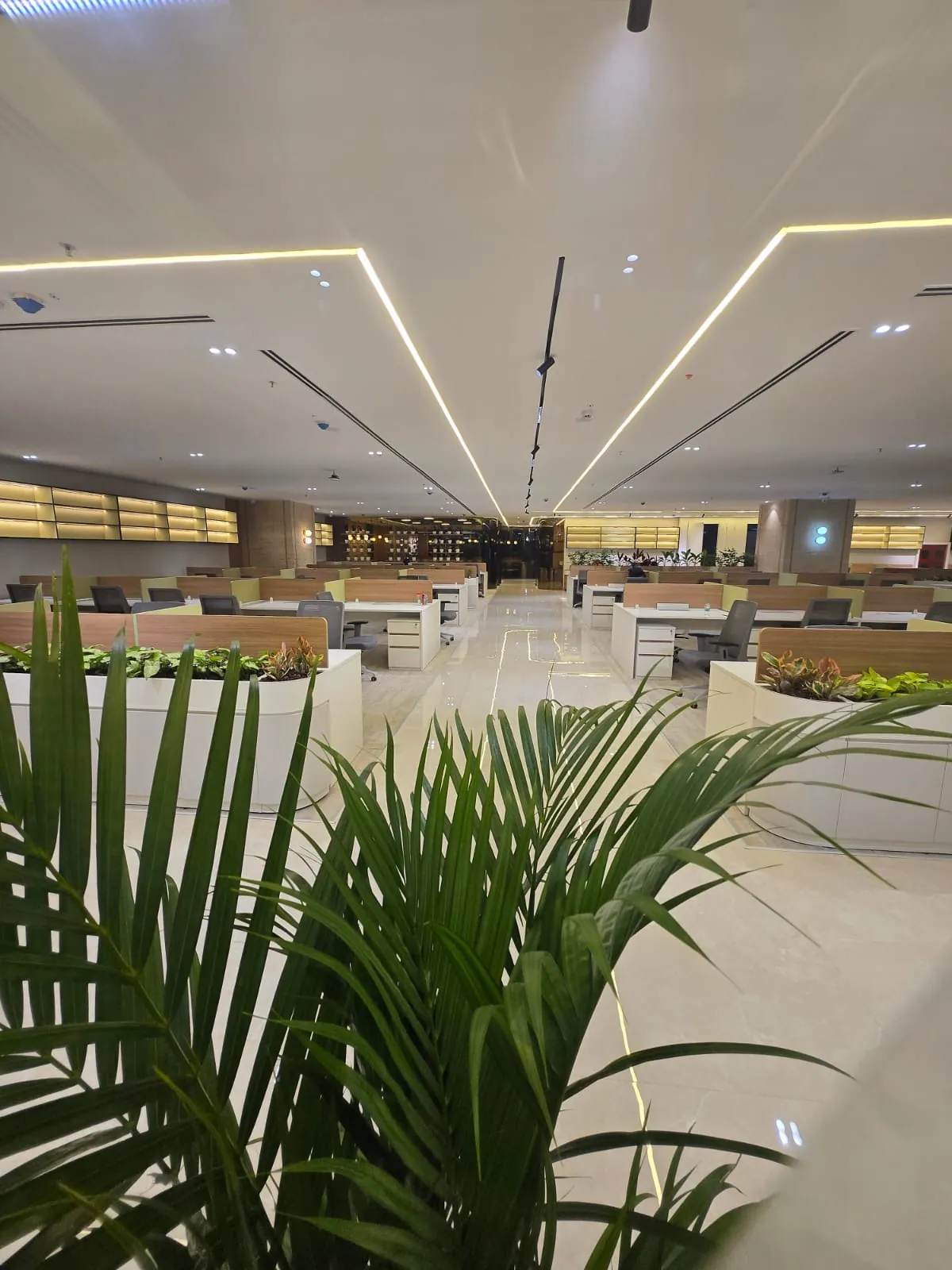
What makes office interiors sustainable in India? It is less about adding green features and more about how the office is specified and run: right-sized air conditioning, controlled LED lighting, low-emission and durable materials, water-saving fittings, less construction waste, and a layout built to adapt. For CFOs, it lowers running costs over the lease. For admin and facilities heads, it makes a healthier, easier-to-maintain office. For leadership, it supports the company’s ESG reporting.
What a sustainable office fit-out means
A tenant controls more than people expect. The building’s shell, chillers and facade belong to the landlord, but the fit-out decides how much of the floor is lit and cooled when nobody is there, what the air smells of on day one, how much material goes to landfill and whether the next layout change needs a demolition crew. Those decisions are made in design, so sustainability belongs in the brief, not in a list of add-ons at the end.
Energy: air conditioning and lighting first
In most Indian offices, air conditioning and lighting are the largest electricity users, so they are where the savings are.
- Size the AC from a heat-load calculation, not a rule of thumb per sq ft. Oversized systems cost more to buy and run less efficiently. Choose the right system for the building: see VRF vs chilled water.
- Zone it. Meeting rooms, cabins and the server room should switch independently, so empty rooms are not cooled all day.
- Use BEE star-rated equipment where the Bureau of Energy Efficiency labels it, and ask for efficiency figures at part load, which is how offices actually run.
- Control the lighting. LED fittings with occupancy sensors in rooms and daylight dimming near windows cut hours of unnecessary use. See the office lighting design guide.
- Cut solar heat. West and south glass in Gurgaon, Noida and Delhi brings in heat and glare; blinds or films that keep the view reduce the AC load.
- Meter it. Separate metering for AC, lighting and power shows where energy goes after move-in. See the office electrical design guide.
Materials: healthier, longer-lasting, documented
Choose materials on evidence, not on the words “eco” or “green” in a brochure.
- Low-emission finishes: paints, adhesives, sealants and laminates with low volatile organic compound (VOC) content, backed by a test report.
- Certified and recycled content: FSC-certified timber, carpet tiles and ceiling tiles with stated recycled content, and products carrying recognised ecolabels such as CII’s GreenPro.
- Local where it makes sense: materials made in India travel less and are easier to replace later.
- Durability: a finish that lasts the full lease beats a cheaper one replaced twice. Compare options in office finishes by tier and office flooring compared.
Every sustainable material still has to meet fire requirements. A product marketed as recycled or natural is not automatically suitable for a ceiling or wall panel; check its fire rating. See office fire safety requirements.
Indoor air quality in Indian cities
A sustainable office should also be a healthy one. In Delhi NCR, windows stay shut through the polluted winter months, so fresh air has to be filtered, not just supplied. Size fresh air for full occupancy, specify filtration suited to the city, and consider carbon dioxide and particulate sensors in meeting rooms so problems show up on a screen rather than as headaches. New finishes and furniture release the most emissions in the first weeks, so allow a flush-out with fresh air before move-in. The office HVAC design guide covers fresh air and filtration.
Water: fittings and building systems
A tenant mainly controls the fittings in pantries and any toilets inside the fit-out. Low-flow taps with aerators, sensor taps, dual-flush cisterns and water-efficient urinals cut use without users noticing. Fix leak points such as pantry under-counter connections before handover. Many larger office buildings treat and reuse water at building level, so ask the landlord what the building provides before adding your own systems. Toilet counts and layouts are in office toilet requirements in India.
Construction waste and reuse
Fit-outs create waste from demolition, offcuts and packaging. Reduce it before it starts:
- Survey what can stay: ceilings, partitions, furniture and carpet that are in good condition.
- Reuse or donate old furniture rather than scrapping it; reupholstered chairs and refinished tables often last years more.
- Order accurately from a measured BOQ to cut offcuts; see what a BOQ is.
- Segregate debris, metal, glass, timber and packaging on site, and send debris to authorised construction and demolition waste processors where your city has them.
- Prefer factory-made, modular items that arrive finished, which reduces site cutting and dust; see modular and prefab office interiors.
Design for change, not demolition
The greenest fit-out is the one you do not have to rip out. Demountable partitions, modular furniture, raised or accessible services and generic meeting rooms that can change use let the office absorb a new team or a hybrid policy without a rebuild. If your current office works but looks tired, a refresh may be the more sustainable choice; see office refresh or full fit-out.
Green ratings for office interiors in India
| Rating | Run by | What it covers |
|---|---|---|
| IGBC Green Interiors | Indian Green Building Council (CII) | Tenant interior fit-outs |
| LEED for Interior Design and Construction | US Green Building Council | Tenant interior fit-outs |
| GRIHA | GRIHA Council (TERI and MNRE) | Mainly whole buildings |
| WELL | International WELL Building Institute | Health and wellbeing of occupants |
A rating adds documentation, fees and a consultant to the project, so decide early whether you need the certificate (for example, for global ESG reporting) or just the outcomes. Many Grade A buildings in Gurgaon, Noida and Bangalore already hold a building-level green rating; ask whether the landlord expects tenants to follow its fit-out guidelines.
Sustainable fit-out checklist
- Sustainability goals are written into the brief, with an owner on your side.
- AC is sized from a heat-load calculation and zoned room by room.
- Lighting is LED with occupancy and daylight controls.
- Glazing has glare and heat control that keeps the view.
- Paints, adhesives and laminates have low-VOC test reports.
- Timber is certified and recycled content is stated for major materials.
- Every finish meets its fire rating.
- Fresh air is sized for full occupancy and filtered for the city.
- Taps, cisterns and urinals are water-efficient.
- There is a plan to reuse furniture and segregate site waste.
- Energy is metered by use after move-in.
- The decision on IGBC, LEED or no certificate is made at the start.
How Officea helps
Officea Design & Build designs, engineers and builds offices under one contract, so energy, materials and waste decisions are specified, priced in the BOQ and built as drawn, rather than lost between consultants and contractors. Officea works from studios in Delhi (Nehru Place), Gurgaon (DLF Grand Mall), Noida (Sector 3) and Bangalore (Residency Road), and delivers fit-outs across India. Already in an office and want to know where it stands? Book a complimentary office health audit from Officea REFRESH, or see our office fit-out service.
Frequently asked questions
What is a sustainable office interior?
An office fit-out planned to use less energy and water, cause less waste, use healthier and longer-lasting materials and stay useful as the company changes. It covers lighting, air conditioning, materials, water fittings, construction waste and the layout itself, not just plants and recycled furniture.
Do sustainable office interiors cost more?
Some items cost more upfront, such as better controls, low-emission finishes or certified timber. Others cost less, such as reusing furniture or right-sizing the air conditioning. Look at the cost over the lease term, because lower power and maintenance bills often pay back the extra.
Which green rating applies to an office fit-out in India?
For a tenant fit-out, the relevant options are IGBC Green Interiors from the Indian Green Building Council and LEED for Interior Design and Construction from the US Green Building Council. GRIHA, from TERI and the Ministry of New and Renewable Energy, mainly rates whole buildings. Many Grade A buildings already carry a building rating, so check what the landlord's rating needs from tenants.
What gives the biggest energy savings in an office fit-out?
Usually the air conditioning and lighting. Size the AC from a real heat-load calculation, zone it so empty rooms switch off, add occupancy and daylight controls to LED lighting, and cut solar heat through glazing with blinds or films.
Can an existing office be made more sustainable without a full fit-out?
Yes. LED retrofits with sensors, AC servicing and controls, low-flow taps, better waste segregation and reupholstering instead of replacing furniture can all be done as a refresh while the office keeps working.