
Quick answer
Water in an office ceiling almost always comes from one of five places: a blocked or badly sloped AC condensate drain, condensation on chilled water or refrigerant pipes whose insulation is missing or damaged, a plumbing or sprinkler joint above the ceiling, rain getting in through the terrace or facade, or high humidity in the monsoon. Make the area safe, stop the water, let the ceiling void dry, fix the source and only then replace the stained or sagging boards and tiles. Painting over a wet ceiling just brings the stain back.
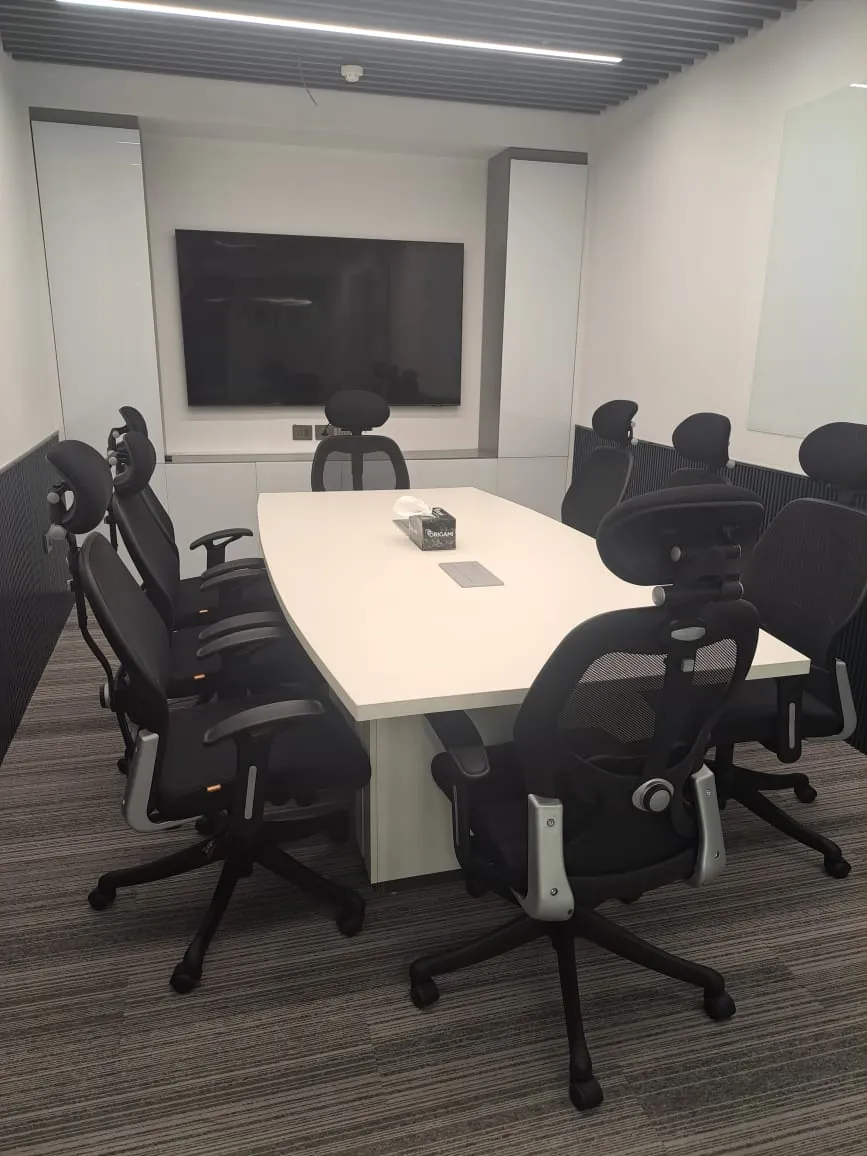
A brown ring appears on a ceiling tile, a gypsum ceiling starts to bulge over the meeting table, or water drips onto a desk every afternoon. Office ceiling leaks are rarely a mystery once you know where to look, but they get worse quickly if the ceiling is simply patched. This guide is for admin and facilities heads, CFOs and founders: where the water comes from, why false ceilings sag, what to fix in what order, who usually pays and how to stop it happening again.
Where is the water coming from?
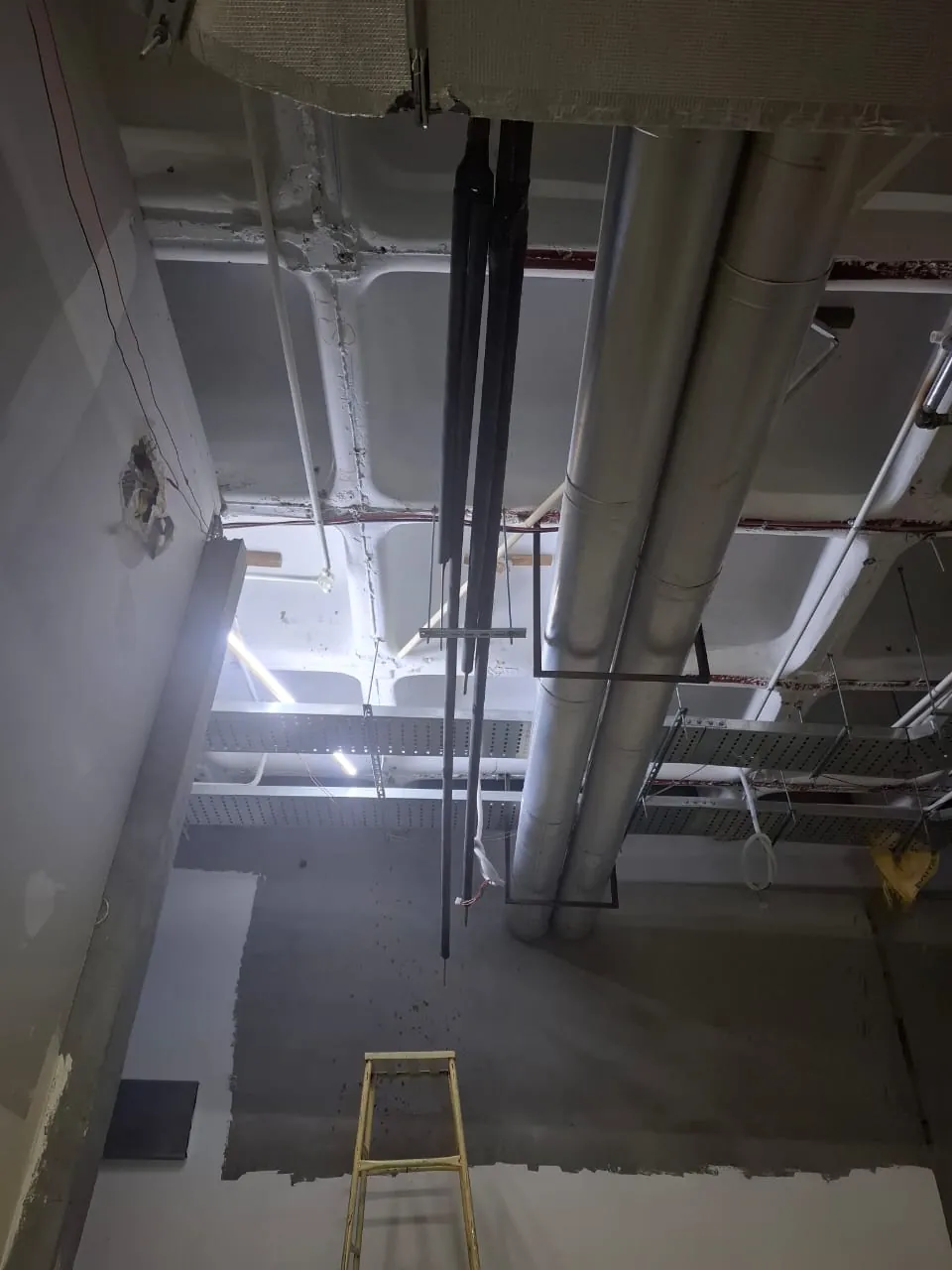
The space above an office false ceiling is crowded: AC units and their drain lines, chilled water or refrigerant pipes, ducts, sprinkler pipes, and sometimes the plumbing of the pantry or the washrooms on the floor above. Any of them can put water onto the ceiling. When the leak happens is usually the best clue.
| What you see | Likely source | First check |
|---|---|---|
| Drips or a stain near an AC indoor unit or cassette, mostly while the AC runs | Blocked, cracked or badly sloped condensate drain; overflowing drain tray; failed condensate pump | Open the nearest access panel and look at the drain line and tray |
| Wet patches along a pipe route, worse on humid days | Condensation (“sweating”) on chilled water or refrigerant pipes, or on ducts, where insulation is missing, torn or not sealed at joints | Run a hand along the insulation; look for gaps at bends, valves and hangers |
| Stain below the pantry, a washroom or the floor above, at any time of day | Leaking supply or drain pipe joint, or a sprinkler pipe joint | Ask the building facility team what sits directly above; check pipe joints in the void |
| Water only during or after heavy rain, often on the top floor or near the facade | Terrace waterproofing, expansion joints, window or curtain wall seals, rainwater pipes | Note which rainfalls caused it; inspect the terrace and facade with the landlord |
| Tiles bowing across a large area without any drip | High humidity, often in the monsoon or when the AC is off over weekends; tiles of the wrong humidity grade | Humidity readings; product details of the installed tiles |
More than one source is common, especially in an office that has been running for several years. Note the date, time, weather and whether the AC was on each time a new stain appears.
Why do gypsum and mineral fibre ceilings sag?
Most Indian offices use two ceiling materials, and both react to water. Our guide to false ceiling types for offices compares them in detail; here is what happens when they get wet.
- Gypsum board is a gypsum core faced with paper. When it soaks up water the core softens, the board gets heavier and it starts to bulge between the frame members. Joints crack, screw heads pop and the paint blisters. Once a board has sagged it does not go back to flat when it dries.
- Mineral fibre tiles sit loose in a grid and absorb moisture from the air as well as from leaks. A low humidity-grade tile near an AC discharge point, or in a humid building, can bow downwards over time even without a single drip.
- The grid or frame can sag on its own if light fittings, AC units or other loads have been hung from it instead of from the slab, or if hangers were spaced too far apart. That looks like a water problem but is a support problem.
Is a sagging or leaking ceiling dangerous?
It can be. A wet gypsum board is much heavier than a dry one, and a bulging section can give way without warning. Water near light fittings, sockets in the ceiling or cable trays is an electrical risk and a common reason for RCCBs to trip (see office electrical tripping). Treat a bulge or an active drip as urgent:
- move people, laptops and papers away from the area and cordon it off;
- ask your electrician to isolate the lighting or power circuits in the wet zone if water is near any fitting;
- put a bucket under the drip and do not push up on a bulging board;
- call the building facility team if the water may be coming from a shared riser, the terrace or the floor above.
Leave cutting or draining a waterlogged board to the maintenance team or your contractor, who can support the section while it is opened.
How do you trace the leak?
- Match the timing. Rain only points to the terrace or facade. AC hours only point to condensate or pipe sweating. Any time of day points to plumbing or sprinkler lines.
- Open the ceiling near the stain. Lift the tiles or use the nearest access panel. Water often travels along a pipe or the top of a board before it drops, so the leak can be some distance from the stain.
- Check the AC drains first. Look for standing water in drain trays, slime or debris in the drain line, joints that have come apart and lines that run flat or uphill.
- Inspect insulation on cold pipes and ducts. Wet or dripping insulation, gaps at valves and hangers, and exposed metal are typical signs of condensation.
- Look above and outside. With the landlord, check what is on the floor above, the terrace drains and the facade seals near the leak.
- Record it. Photographs, dates and readings help the landlord, your AMC provider or your contractor act quickly, and settle who pays.
What should you fix first?
The order matters. Replacing tiles before the source is fixed just means replacing them again.
- Make it safe and protect people, equipment and electrics.
- Stop the water at the source: clear or re-slope the drain, repair the joint, reseal the facade or terrace.
- Dry the void. Remove soaked tiles and boards and any wet insulation, and let the space above dry out fully.
- Check what else got wet. Look for mould on boards and insulation, corrosion on the grid, and water inside light fittings, cable trays or junction boxes.
- Replace, then finish. Fit new tiles or boards. On gypsum, use a stain-blocking primer before repainting so old marks do not bleed through.
- Re-test. Run the AC on a humid day, or wait for the next heavy rain, before closing the job.
Not sure where the water is coming from, or whether the ceiling can be patched? Officea can inspect the ceiling, services and finishes as part of an office health audit and price the repair as its own line.
Who pays for the repair?
It depends on the source and on your lease and contracts, so check the documents. As a general pattern:
- Terrace, facade, structure and shared risers are usually the landlord’s responsibility in a leased office.
- Your own AC drains, pantry plumbing and ceiling are usually yours, and routine drain cleaning belongs in your AC maintenance contract.
- A recent fit-out: if the leak comes from poor workmanship, such as a drain joint that was never glued or insulation left open, it may be the contractor’s to fix under the defect liability period.
- A leak from the floor above is normally between the landlord and that tenant; give the building facility team your photographs and dates.
This is general information, not legal advice.
How do you stop leaks coming back?
Most ceiling leaks are designed out or built out during the fit-out. If you are planning a new office or a refresh, ask for these:
- Condensate drains with a continuous fall, proper traps, glued joints, insulation on the drain line and a test with water before the ceiling is closed.
- Continuous insulation with a sealed vapour barrier on chilled water and refrigerant pipes, including valves, bends and hanger points.
- Pressure-tested plumbing above ceilings, and as little wet plumbing as possible routed over workstations and server rooms.
- Access panels below every valve, drain point, damper and condensate pump in a gypsum ceiling, so maintenance does not mean cutting the ceiling.
- The right materials: higher humidity-grade tiles near AC units and in humid cities, and moisture-resistant board or metal in pantries and washrooms.
- A pre-monsoon check of terrace drains, facade seals and AC drains, written into the maintenance calendar.
Leaking drains are also one reason an AC stops performing; our guide on office AC not cooling covers the rest of that maintenance list.
Repair a patch or replace the ceiling?
| What you found | Usual fix | Disruption |
|---|---|---|
| A few stained or bowed mineral fibre tiles | Replace the tiles with a matching or higher humidity grade once the source is fixed | Low; can be done after hours |
| Local damage to a gypsum ceiling | Cut out the damaged section, re-board, tape, prime and repaint | Low to moderate; dust control needed |
| Grid or frame sagging under loads | Add hangers, take fittings and units back to the slab, realign the grid | Moderate |
| Widespread sagging, repeated leaks, old ceiling | Replace the ceiling in that zone and fix services above it at the same time | Moderate to high; plan with a refresh |
If large areas need new ceilings, plan the work with anything else the office needs, so the ceiling is opened once. Our guide on how to refresh an office without stopping work explains phasing, and an office health audit looks at ceilings and services alongside the rest of the workplace. If you are comparing repair quotes, our complimentary quote comparison checks what each bidder has included.
For other everyday office issues, browse office problems and solutions. Officea designs and builds offices, including ceilings and air conditioning, under one contract from studios in Delhi (Nehru Place), Gurgaon (DLF Grand Mall), Noida (Sector 3) and Bangalore (Residency Road).
Frequently asked questions
Why is water dripping from our office ceiling?
The usual causes are a blocked or badly sloped AC condensate drain, condensation on chilled water or refrigerant pipes with missing or damaged insulation, a leaking plumbing or sprinkler joint above the ceiling, or rain entering through the terrace or facade. When it drips is the best clue: during AC hours, after rain, or at any time.
Why is our false ceiling sagging?
Gypsum boards soften and bulge when they absorb water, and mineral fibre tiles bow when they take on moisture from leaks or humid air, especially if a low humidity grade was used. A ceiling can also sag when lights or AC units are hung from the grid instead of the slab.
Can we just paint over a water stain on the ceiling?
Not until the leak is fixed and the ceiling has dried completely. Paint over a wet or untreated stain usually lets the mark show through again. Replace damaged boards or tiles, use a stain-blocking primer and then repaint.
Who is responsible for a ceiling leak in a leased office?
It depends on the source and the lease. Terrace, facade and shared building services are usually the landlord's responsibility, while the tenant's own AC drains, pantry plumbing and ceiling are usually the tenant's. Leaks from poor workmanship in a recent fit-out may fall under the contractor's defect liability period.
How do we stop AC condensate leaks in the office ceiling?
Drain lines need a continuous fall, glued joints, traps and insulation, and they should be tested with water before the ceiling is closed. Clean drain trays and lines as part of the AC maintenance contract, check condensate pumps, and keep access panels below every drain point.