
Quick answer
Office breakers trip for five usual reasons: a circuit carrying more load than it was designed for (pantry appliances, heaters, extra desks), earth leakage that trips the RCCB (moisture, damaged cables, faulty appliances), unbalanced phases, old or loose wiring, and the surge when power changes over to the DG or UPS. Note which breaker trips and when, unplug and reset once, and if it trips again call a qualified electrician. Never fit a bigger breaker or bypass an RCCB to stop the tripping.
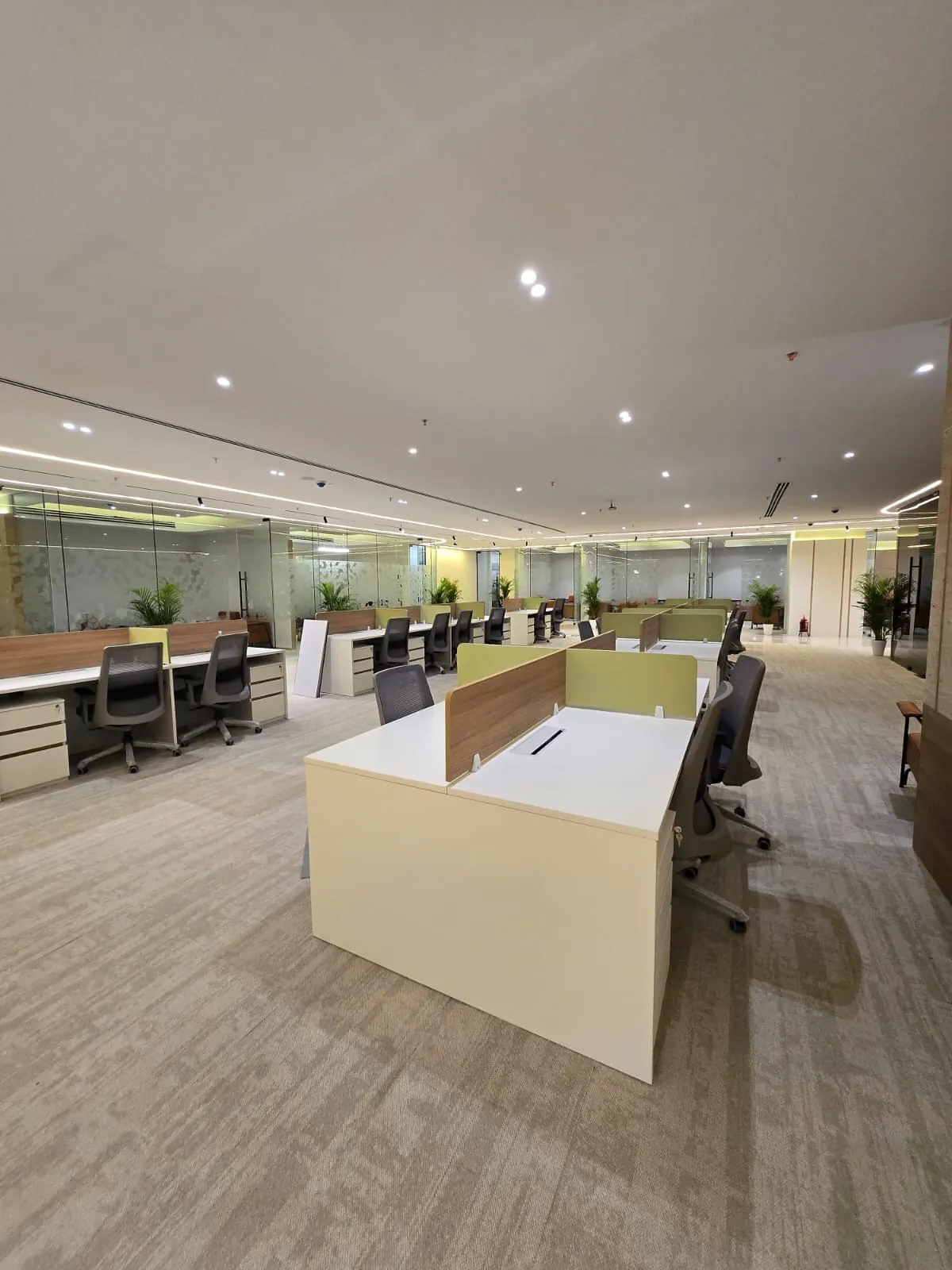
The lights go off in one wing every afternoon, the pantry circuit trips whenever two kettles run together, or the whole floor goes dark for a second each time the generator takes over. Electrical tripping in an office is a warning, not just a nuisance: the breaker is doing its job and telling you something is wrong. This guide is for admin and facilities heads, CFOs and founders: what each kind of trip usually means, what to check first, what never to do and how to design the problem out at your next fit-out or refresh.
Safety first: electrical faults can cause fires and shocks. Use this guide to understand the problem and brief your team; leave testing, opening distribution boards and any repair to a qualified, licensed electrician.
Why do office breakers keep tripping?
The pattern of the trip is the best clue. Before calling anyone, note which breaker tripped, the time, and what had just been switched on. Then use this table to brief your electrician.
| What you see | Likely cause | First check |
|---|---|---|
| An MCB trips when a kettle, heater, microwave or printer comes on | Overload on that circuit | What else is on the same circuit; move the appliance to its own circuit |
| An MCB trips the instant it is reset | Short circuit or a faulty appliance | Unplug everything on the circuit; if it still trips, leave it off for the electrician |
| The RCCB trips after rain, cleaning or a leak | Earth leakage through moisture | Wet floor boxes, sockets, ceiling light points, outdoor fittings |
| The RCCB trips at random with nothing new switched on | Damaged insulation, a faulty appliance, or too many devices on one RCCB | Insulation resistance test; split circuits across more RCCBs |
| Trips when power changes over to the DG or UPS | Restart surge, undersized DG share or UPS, wrong loads on UPS | What is plugged into UPS sockets; the allocated DG load |
| The main incomer trips at the afternoon peak | Total demand above the sanctioned or allocated load, or one phase overloaded | Load reading on each phase at peak time |
| Warm sockets or switches, a burning smell, buzzing at the DB | Loose connection or overheating cable | Treat as urgent: switch off that circuit and call the electrician |
MCB, RCCB or main incomer: what is each trip telling you?
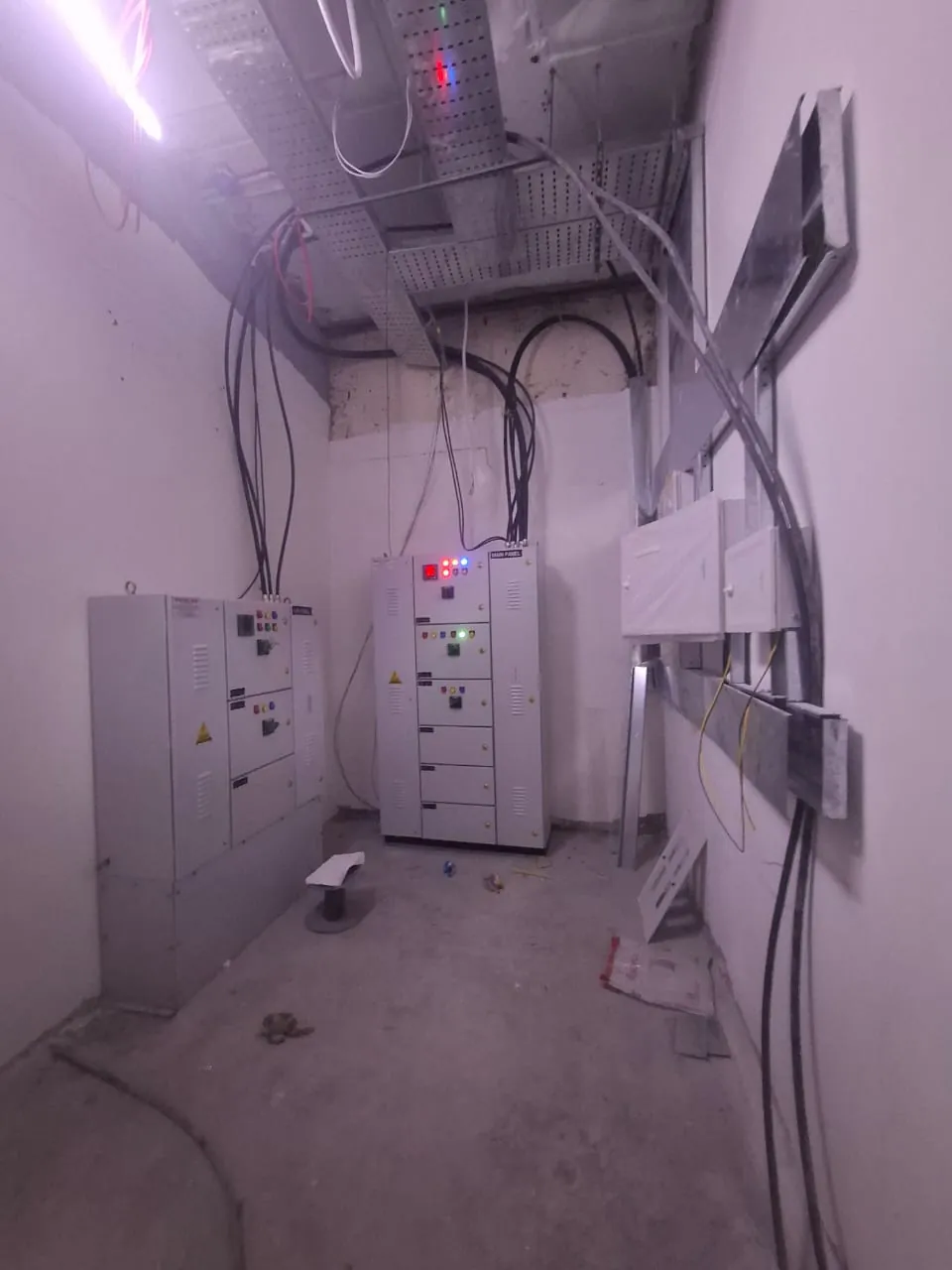
An office distribution board (DB) holds several kinds of protection, and each trips for a different reason:
- MCB (miniature circuit breaker): protects one circuit against overload and short circuit. A single MCB tripping points to that circuit and what is plugged into it.
- RCCB or RCBO: watches for current leaking to earth, which is what causes electric shocks and many electrical fires. Many people still call it an ELCB, the older name. RCCBs for personal protection usually trip at 30 mA of leakage, a very small current, so moisture or a worn cable can set one off.
- MCCB or main incomer: protects the whole board or floor. If it trips, the problem is total load, a major fault, or one phase carrying far more than the others.
A tripping breaker is protecting your people, cables and equipment. The fix is always to remove the cause, never to weaken the protection.
Is the office simply overloaded?
Overload is the most common cause in offices that have grown since the fit-out. Circuits were sized for the original layout, and then the office changed:
- Pantry appliances. Kettles, microwaves, induction plates, coffee machines and water dispensers draw a lot of power, often on one or two sockets. Two heating appliances on the same circuit at lunchtime is a classic trip.
- Room heaters in winter. Portable heaters plugged into workstation sockets in North Indian winters overload circuits sized for laptops and monitors.
- More desks than the circuit was designed for. Extra seats added to a bench, or a new team squeezed into a zone, all feed from the same circuits.
- Printers, shredders and IT kit added to whichever socket is nearest.
- Extension boards that hide how much is plugged into one point.
The fix is to move heavy appliances to dedicated circuits and add circuits where seats have been added, after checking that the DB and incoming supply have spare capacity. Our office electrical design guide covers load per workstation, pantry loads, diversity and how much supply an office needs. If the same growth is also pushing up running costs, see why an office electricity bill increases.
Why does the RCCB trip, especially in the monsoon?
An RCCB trips when it senses current leaking to earth instead of returning through the neutral. Common leakage paths in offices are:
- Moisture: floor boxes and floor sockets wet from mopping, water from an AC drain or a leak reaching ceiling light points (see our guide to office ceiling leaks), and outdoor or terrace fittings in the monsoon;
- damaged cable insulation: cables nicked by screws in partitions, crushed under furniture or cut during a past alteration;
- faulty appliances: especially those with heating elements, such as kettles, geysers and heaters;
- many electronic devices on one RCCB: computers, monitors and chargers each leak a tiny current by design, and together on one RCCB they can add up to a nuisance trip.
An electrician finds the fault by isolating circuits one at a time and testing insulation resistance. If no fault is found and the RCCB still trips, the circuits may need to be split across more RCCBs. Never bridge or remove an RCCB to keep the power on.
What are unbalanced phases?
Most offices take a three-phase supply, and single-phase loads such as lights, sockets and small AC units are meant to be spread evenly across the three phases. Over time, new circuits often get added to whichever phase has a spare way in the DB, until one phase carries much more than the others. That phase trips first even though the total load is within limits, and the neutral can run hot.
An electrician can read the current on each phase with a clamp meter at peak time and move circuits at the DB to rebalance them. It is a quick, low-cost fix once the readings are taken, and it is worth repeating after any layout change.
Why does it trip at DG or UPS changeover?
When the grid fails and the generator takes over, every motor, AC compressor and power supply restarts at almost the same time. That surge can trip breakers that never trip on normal supply. Other common causes are:
- a DG share smaller than your load: in many multi-tenant buildings the landlord allocates each tenant a fixed DG capacity, and loads added since the fit-out can exceed it;
- the wrong loads on UPS sockets: heaters, kettles, printers and shredders plugged into UPS points overload the UPS, which then trips or switches to bypass;
- neutral and earthing at the changeover point: an incorrect arrangement can make RCCBs trip every time the source changes.
Mark UPS sockets clearly so they are used only for computers and network equipment, check your allocated DG load with the building facility team, and have the changeover arrangement checked by a qualified electrician. A server or network room should have its own UPS and circuits; our guide to structured cabling and server room design explains why.
Could old or loose wiring be the cause?
In older offices and buildings, connections at DBs, sockets and switches loosen over years of heating and cooling. A loose connection heats up, discolours, smells of burning plastic and can trip breakers or start a fire. Cables may also be undersized for today's loads or damaged by past alterations. Signs to act on: warm or browned sockets and switch plates, flickering lights on one circuit, buzzing from the DB, and a DB with no up-to-date circuit schedule.
A maintenance check by an electrician typically includes tightening terminations, an insulation resistance test, an earth resistance test and, where available, a thermal scan of the DBs to find hot spots before they fail.
Breakers tripping, warm sockets or an electrical layout that no longer matches the office? Officea can check the electrical and other services as part of an office health audit and price the fixes as separate lines.
What should you do when breakers keep tripping?
- Record the pattern. Which breaker, what time, the weather, and what was switched on just before. A week of notes saves hours of fault-finding.
- Unplug and reset once. Unplug the appliances on that circuit, reset the breaker, then plug them back one at a time. If one appliance trips it each time, take it out of use.
- Leave it off if it trips immediately. A breaker that trips on reset with nothing plugged in points to a wiring fault. Do not keep resetting it.
- Call a qualified electrician to test insulation and earthing, read the load on each phase, tighten connections and check that the DB schedule matches what is actually connected.
- Involve the building facility team if the main incomer trips, the problem starts at changeover, or the fault may be in shared risers or the building supply.
- Fix the cause properly: new circuits for heavy loads, rebalanced phases, split RCCB groups, repaired cables, or corrected UPS and DG loads. Never fit a higher-rated MCB, bypass an RCCB or chain extension boards to keep the power on.
Who pays for the repair?
It depends on where the fault is and what your lease says. The building supply, transformer, shared DG and risers are usually the landlord's. The DBs, wiring and sockets inside your premises are usually yours. If the office was fitted out recently and the fault is poor workmanship, such as loose terminations or a wrongly connected circuit, it may fall under the contractor's defect liability period. Report it in writing with photos and dates.
How do you design tripping out of a fit-out?
Most chronic tripping is designed or built in. If you are planning a new office or a refresh, ask for these:
- A load schedule built up from the actual layout: workstations, cabins, meeting rooms, pantry appliances, AC and the server room, checked against the sanctioned load and DG allocation.
- Dedicated circuits for pantry appliances, printers and copiers, AC units and the server room, separate from workstation circuits.
- Clearly marked UPS and raw power sockets, with UPS power kept for computers and network equipment.
- Phases balanced at design stage and checked with load readings after occupation.
- RCCBs grouped sensibly, so one leakage fault does not take out a whole floor and many IT loads do not share one RCCB.
- Spare ways and capacity in each DB for the layout changes every office makes.
- Earthing tested and recorded at handover, with a labelled DB schedule and test certificates in the handover file.
Officea designs and builds offices with the electrical, AC and IT services under one contract; our MEP works page explains how. For an existing office, an office health audit is a good way to find electrical and other problems before they cause downtime. For other everyday office issues, browse office problems and solutions.
Frequently asked questions
Why does the MCB in our office keep tripping?
An MCB trips on overload or a short circuit. If it trips when a kettle, heater, printer or extra workstations come on, that circuit is carrying more than it was designed for. If it trips the moment you reset it, there is likely a short circuit or a faulty appliance, and an electrician should test the circuit before it is used again.
Why does the RCCB trip when it rains or after the floor is mopped?
An RCCB trips when current leaks to earth. Moisture in floor boxes, sockets, outdoor fittings or ceiling light points creates that leakage path, and so do damaged cables and some appliances. Find and dry the wet point, have the circuit's insulation tested, and never bypass the RCCB.
Can we fit a bigger breaker to stop the tripping?
No. A breaker is sized to protect the cable behind it. Fitting a higher-rated MCB lets the cable overheat before anything trips, which is a fire risk. Reduce or move the load, add a new circuit, or have an electrician correct the design instead.
Why does the power trip when the supply changes over to the generator or UPS?
Usually because many loads restart at the same moment, because the DG share or UPS is smaller than the load put on it, or because non-critical equipment such as heaters, kettles and printers is plugged into UPS sockets. The neutral and earthing arrangement at the changeover point can also cause RCCBs to trip and needs checking by a qualified electrician.
Is it safe to keep resetting a breaker that trips?
Resetting once after unplugging the likely cause is reasonable. Resetting again and again is not: repeated tripping means a fault or an overload that is still there. Note what was running, leave the breaker off if it trips immediately, and call a qualified electrician.