
Short answer
The top office interior design trends in India for 2026–27 are: fewer fixed desks and more team space, acoustic comfort, GCC-grade offices, flex-ready layouts, privacy-safe smart technology, daylight and plants, energy-efficient green fit-outs, modular interiors, refreshing instead of relocating, and single-contract design and build. They show up most strongly in Delhi NCR and Bangalore, where the most large offices are being leased and fitted out.
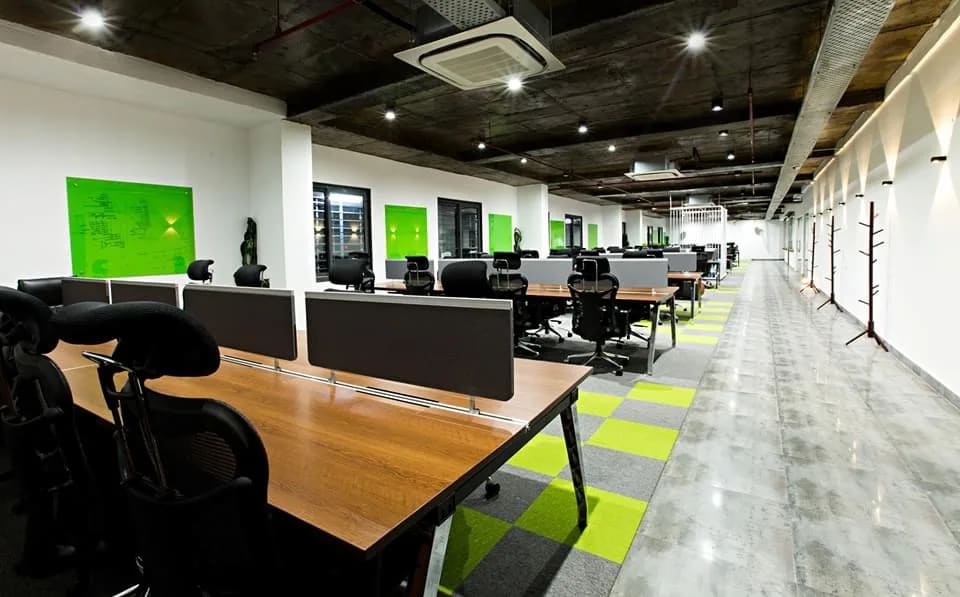
Top 10 office interior trends, 2026–27
What each trend means for your fit-out
| # | Trend | What changes in the fit-out |
|---|---|---|
| 1 | Fewer desks, more team space | Lower desk ratio, more meeting and project rooms |
| 2 | Quiet by design | Focus rooms, phone booths, rated partitions and ceilings |
| 3 | GCC-grade offices | Security zones, labs, training rooms, 24x7 services |
| 4 | Flex-ready layouts | Neighbourhoods that grow or shrink without rebuilding |
| 5 | Smart, privacy-safe tech | Booking, sensors and access control planned for the DPDP Act |
| 6 | Daylight and plants | Desks near windows, lower partitions, planting, warmer lighting |
| 7 | Green, efficient fit-outs | Efficient HVAC zoning, LED lighting, metering, low-VOC finishes |
| 8 | Modular interiors | Demountable partitions, pods, offsite joinery |
| 9 | Refresh, not relocate | Audit the office, then phase upgrades while people work |
| 10 | One contract | Design, MEP, build and furniture under one team and price |
2026 rate card, Delhi NCR (GST extra, furniture included): Basic ₹1,800, Medium ₹2,200, Good ₹2,600, High end ₹4,500 per sq ft. Other metros about 10% higher.
Why offices look different in 2026–27
Office interior design in India is being shaped less by fashion and more by who is leasing. Global capability centres (GCCs) are the biggest force. India now has about 2,117 GCCs employing more than 2.36 million people, according to an Awfis and Zinnov report published in August 2026, and they want offices that help them hire and keep specialist talent.
Flexible workspace is the second force. Savills data reported in August 2026 shows flex operators took 18% of office leasing in India's six biggest markets in the first half of 2026, up from 16% in 2025. In Delhi NCR the share was 26%, the highest of any city, and Bengaluru was at 23%.
Put together, companies are asking more from every square foot. The office has to earn the commute, adapt as teams change, and stay within budget. The ten trends below are how that shows up on site, based on what clients ask us for, national market data, and Officea's own lease database of 1,422 NCR office buildings.
The top 10 office interior trends for 2026–27
1. Fewer fixed desks, more space for teams
With hybrid attendance now normal, many companies no longer give every employee a fixed desk. The space saved goes into meeting rooms of different sizes, project rooms, and open collaboration areas. The design question has moved from "how many desks fit?" to "how many people come in on the busiest day, and what do they come in to do?" A test-fit plan done before you sign a lease answers this cheaply. See what a test-fit plan is and how much office space you need.
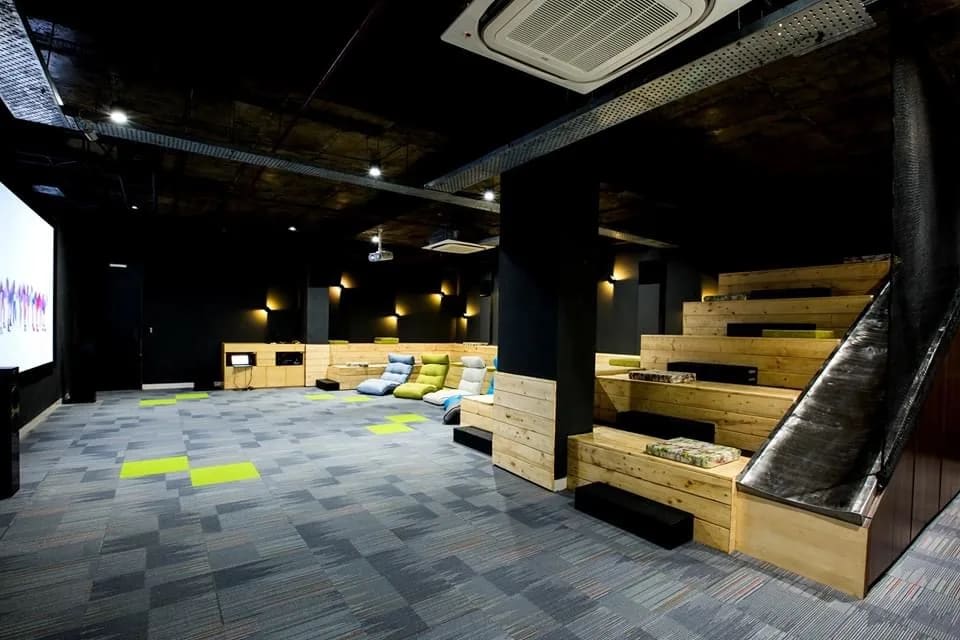
2. Quiet by design: acoustics, focus rooms and phone booths
Noise is the most common complaint in open offices, and video calls have made it worse. Offices in 2026–27 are being planned with quiet zones, one- and two-person focus rooms, phone booths, and meeting rooms with proper sound ratings for walls, doors and ceilings. Acoustic design is far cheaper at the drawing stage than as a fix after handover. Our office acoustics guide explains the NRC and STC ratings to ask for.
3. GCC-grade offices
GCCs bring global standards to Indian fit-outs: restricted zones with access control, labs and server rooms, training rooms, wellness rooms, and services that run around the clock. Even companies that are not GCCs are adopting the same benchmarks for security, IT and employee amenities, because they compete for the same people. Read about turnkey office interiors for GCCs and how Officea works with GCCs.
4. Flex-ready layouts
Some companies now sit partly in their own office and partly in flex or managed space. Others plan their own floors so that a team neighbourhood can grow or shrink without rebuilding. That means repeatable modules, furniture that can be reconfigured, and power and data laid out for more than one arrangement. If you are weighing the options, see flex office vs your own fit-out and our managed offices page.
5. Smart offices that respect privacy
Room booking, occupancy sensors, smart access control and visitor kiosks are becoming standard in larger offices. They help facilities teams right-size space, but they also collect personal data. Under India's Digital Personal Data Protection (DPDP) Act and its Rules, these systems should be designed with consent, purpose and data retention in mind from day one. See our smart office and DPDP Act guide and how occupancy data is changing office design.
6. Daylight, plants and wellbeing
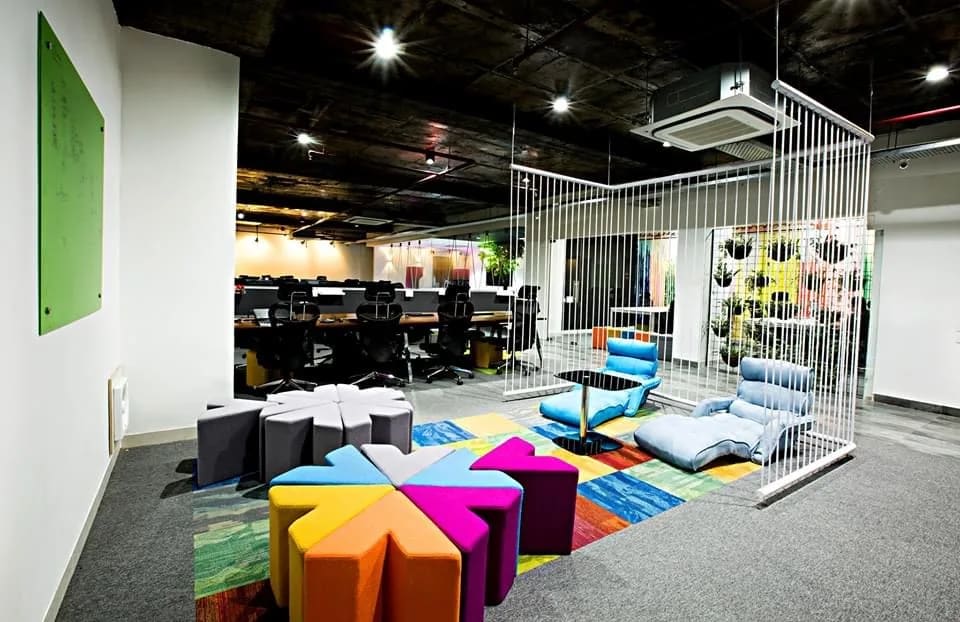
Biophilic design, meaning daylight, plants, natural materials and views outside, has moved from a premium extra to a normal brief. In practice it means placing workstations near windows, keeping partitions low on the window side, adding planting, and choosing lighting that is comfortable for a full day. Our office lighting design guide covers lux levels and glare.
7. Green, energy-efficient fit-outs
More than half of new office buildings in India are green-rated, according to JLL, and tenants increasingly want the interiors to match. A green fit-out focuses on efficient air conditioning zones and controls, LED lighting with sensors, energy metering, low-VOC paints and adhesives, and materials that last. These choices also lower running costs. Our office HVAC design guide explains where the energy goes.
8. Modular and prefab interiors
Demountable glass partitions, ready-made meeting pods and joinery made off site are cutting time on site and making future changes easier. They do not suit every project, and they can cost more upfront. Read what works and what doesn't in modular office interiors.
9. Refresh instead of relocate
With rents rising in the major markets, many companies are choosing to stay and upgrade rather than move. A refresh replaces worn finishes, rebalances the layout, upgrades lighting and acoustics, and fixes services, often in phases while people keep working. Start with an Office Health Audit, then see Officea REFRESH and whether to renew or relocate.
10. One contract: design and build
Separate contracts for design, civil, MEP and furniture create gaps, and gaps cause delays and extra costs. More companies now want one team responsible from the first layout to handover, with one price and one timeline. As examples, Officea handed over a 3,000 sq ft Gurgaon office in 28 days and a 10,000 sq ft Noida office in 43 days under single contracts. Compare design and build with a traditional fit-out.
What this means for CEOs, CFOs, HR and real estate heads
Founder's view
“Every office has to work for four groups of people. The CFO wants cost optimisation. HR wants people actively involved in the office, so it has to be engaging and useful. The CEO wants a strong company image and to attract more good people, and for that they need a good office and good policies. And the staff want an easy commute, parking, good amenities, a good atmosphere and security. A good office design answers all of them at once.”
Gurpreet Singh, Co-Founder, Officea Design & Build
Here is how the ten trends map to each of them, plus the real estate head who signs the lease.
- CFO: cost optimisation. Most of these trends move money between line items rather than add to the total. Planned at 80 to 100 sq ft per seat, a Delhi NCR fit-out works out to about ₹1.4 lakh to ₹4.5 lakh per seat on Officea's 2026 rate card, GST extra and furniture included. Fewer fixed desks (trend 1) cut the area you need, efficient air conditioning and lighting (trend 7) cut running costs for the life of the lease, and modular elements (trend 8) lower the cost of the next change. Our fit-out checklist for CFOs covers what to ask for.
- HR: an office people want to use. Engagement comes from a mix of spaces: team areas and project rooms (trend 1), quiet rooms for focus (trend 2), and daylight and plants (trend 6). An office that only offers rows of desks gives people little reason to come in.
- CEO: company image and talent. The reception, meeting suite and overall quality of the space are what every candidate and client sees first. GCC-grade standards (trend 3) are now the benchmark that good people compare against. See office interior design and your brand.
- Staff: easy access, parking, amenities, atmosphere and security. Much of this is decided when the building is chosen, before design starts: the metro connection, parking bays, lifts and building security. Inside the office, it comes down to pantry and breakout spaces, comfortable light and air, and access control (trend 5). Our ten checks before you lease cover parking and access.
- Real estate head: when and where. Flex-ready layouts (trend 4) keep options open if headcount changes mid-lease, refreshing instead of relocating (trend 9) can avoid a move entirely, and a fit-out planned before signing can finish inside the rent-free period. See fit-out timelines and rent-free periods.
How the trends play out city by city
The same ten trends apply across India, but each market leans on different ones.
Delhi NCR: Gurgaon, Noida and Delhi
Officea tracks 1,422 office buildings in Gurugram, Noida and Delhi in its own lease database, and three findings shape how NCR offices are being designed:
- Most offices are small, but most space is in large ones. 62% of tenancies are under 5,000 sq ft, yet tenancies of 50,000 sq ft and above hold 45% of leased space. Small offices need every square foot to work hard; large ones are where GCC-grade standards (trend 3) are set.
- Flex is concentrated in the premium corridors. Flex operators hold 29% of named leased space on Golf Course Road, the highest of any large corridor. That makes flex-ready layouts (trend 4) the norm there.
- The established corridors are nearly full. Cyber City, NH-8 and Golf Course Road report 94% to 97% of listed space leased, while the Noida Expressway reports 43%. Where space is tight, companies refresh rather than relocate (trend 9); where it is available, they build new.
Read the full Who's Leasing Where report. For your location, see Gurgaon (including Cyber City, Golf Course Road, Golf Course Extension Road and Udyog Vihar), Noida (including the Noida Expressway and Sector 62) and Delhi (including Nehru Place, Connaught Place and Aerocity), or all Delhi NCR areas. Costs: Gurgaon, Noida, Delhi.
Bangalore
Bangalore has the largest concentration of GCCs and a 23% flex share, so GCC-grade offices, acoustics and smart technology lead here. Large campuses on the Outer Ring Road, in Whitefield and at Manyata and Hebbal are adopting these first. See the Bangalore cost page.
Mumbai, Pune, Hyderabad and Chennai
In Mumbai, high rents in BKC and Lower Parel and Worli make dense, flexible layouts and refreshes the priority. Pune, Hyderabad and Chennai are growing GCC hubs, where new floors are being fitted out with GCC-grade security, training space and green specifications. Cost pages: Mumbai, Pune, Hyderabad, Chennai.
Chandigarh, Jaipur, Kolkata and Goa
In Chandigarh, Jaipur, Kolkata and Goa, offices tend to be smaller and owner-occupied. Brand-led receptions, daylight and durable, low-maintenance finishes give the best value. See the Chandigarh and Goa cost pages.
What the trends cost
Most of these trends change where the money goes rather than adding to the total. Fewer desks free up budget for meeting rooms and acoustics. Efficient HVAC and lighting cost a little more upfront but less to run. Officea's 2026 rate card for Delhi NCR and Chandigarh is ₹1,800 per sq ft (Basic), ₹2,200 (Medium), ₹2,600 (Good) and ₹4,500 (High end), GST extra, with furniture included. Bangalore, Mumbai, Pune, Hyderabad, Chennai and Goa run about 10% higher. See the full India office fit-out cost index, or try the office layout planner to price your own layout.
How to use these trends in your next office
- Start with your people, not the trend list. Count peak-day attendance, and list the work done in the office.
- Pick three or four trends that fit. No office needs all ten. A GCC floor in Gurgaon and a 40-seat office in Chandigarh need different things.
- Test them on a plan before you sign. A test-fit on your shortlisted building shows what fits and what it costs.
- Write them into the brief. Put acoustic ratings, lighting levels and green specifications in the brief, so every quote prices the same thing. Our fit-out RFP guide shows how.
- Keep one team accountable. Trends are easy to draw and hard to build. One contract keeps design intent intact on site.
Frequently asked questions
What are the top office interior design trends in India for 2026–27?
The top ten are fewer fixed desks with more team space, acoustic comfort, GCC-grade offices, flex-ready layouts, privacy-safe smart technology, daylight and plants, energy-efficient green fit-outs, modular interiors, refreshing instead of relocating, and single-contract design and build.
Which office design trends matter most in Delhi NCR?
Delhi NCR has India's highest flex share, so flex-ready layouts and managed offices matter most. Gurgaon leads on GCC-grade offices, Noida on fast, cost-efficient large floors, and Delhi's older buildings benefit most from refreshes and better HVAC and lighting.
Do these trends make an office fit-out more expensive?
Not necessarily. Most of them move money between line items rather than add to the total. Fewer desks free budget for meeting rooms and acoustics, and efficient HVAC and lighting lower running costs. Officea's 2026 Delhi NCR rates run from ₹1,800 to ₹4,500 per sq ft, GST extra, with furniture included.
Is open-plan office design going away?
No, but it is changing. Open areas are staying, but they are being broken into team neighbourhoods and paired with focus rooms, phone booths and quiet zones, so people can choose the right space for each task.
How do I choose which trends to use in my office?
Start with how your people work: peak attendance, meetings, focus work and visitors. Pick the three or four trends that solve your real problems, test them on a floor plan of your shortlisted building, and write them into the brief so every quote prices the same thing.
Planning an office for 2026–27? Officea Design & Build offers a complimentary site visit and a layout and budget estimate for your building, so you can see which of these trends fit your team and budget. Request yours here.
Sources
- Allwork.Space (Savills data): Flexible workspace made up 18% of India's office leasing in H1 2026, 28 Aug 2026
- Machine Maker: Awfis and Zinnov report highlights new GCC workplace trends in India, 31 Aug 2026
- JLL: How workplace design helps retain talent in India
- RealtynMore: Delhi-NCR rides GCC expansion and corporate occupier demand, 3 Jan 2026
- Officea: Who's Leasing Where, NCR office tenant report, 28 Oct 2026 (Officea Lease Database)
- Officea 2026 rate card